
Introduction
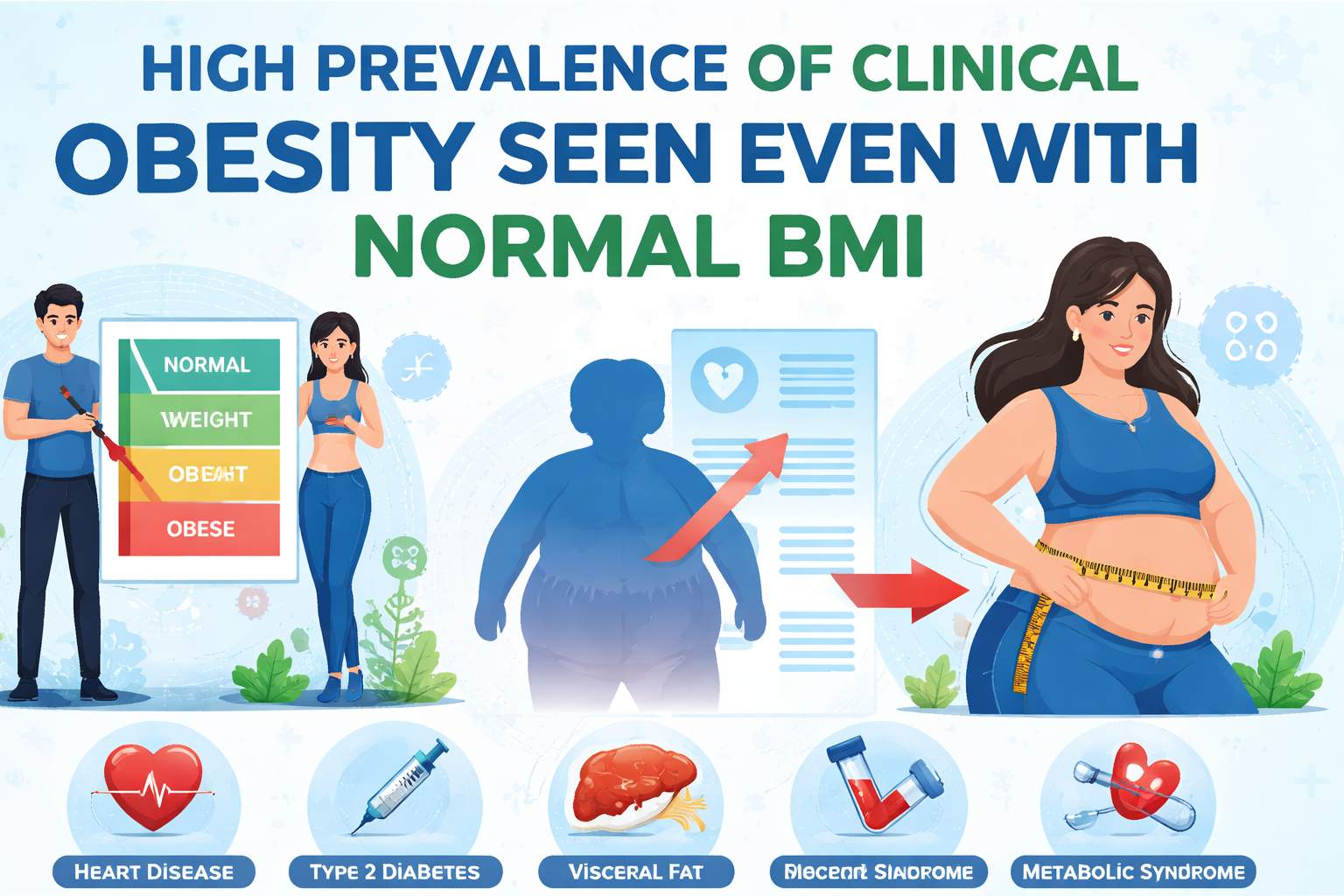
Body Mass Index (BMI) has long been used as a standard tool for assessing whether a person is underweight, normal weight, overweight, or obese. However, growing evidence suggests that BMI alone may not accurately reflect a person’s overall health or body composition. A recent study has highlighted a concerning trend: a significant number of individuals classified as having a normal BMI may still meet the criteria for clinical obesity due to excess body fat and related health risks. These findings challenge traditional approaches to obesity diagnosis and underscore the importance of more comprehensive health assessments.
Understanding BMI and Its Limitations
BMI is calculated by dividing a person’s weight in kilograms by the square of their height in meters. While it is a simple and widely used screening tool, BMI does not distinguish between fat mass, muscle mass, bone density, or fat distribution. As a result, two individuals with the same BMI can have very different body compositions and health profiles.
For example, a person with a normal BMI may have a high percentage of body fat and low muscle mass, a condition sometimes referred to as “normal-weight obesity.” Despite appearing healthy according to BMI standards, these individuals may face many of the same health risks associated with traditional obesity.
Key Findings of the Study
The study found that a substantial proportion of adults with normal BMI values actually had body fat levels that would classify them as clinically obese when more accurate measurements were used. Researchers assessed body composition using advanced methods such as dual-energy X-ray absorptiometry (DEXA) scans and other fat-measurement techniques.
The findings revealed that relying solely on BMI can result in a significant underdiagnosis of obesity. Many participants who appeared to have healthy weights showed excessive fat accumulation, particularly around the abdomen, which is known to increase the risk of metabolic and cardiovascular diseases.
Health Risks Associated With Clinical Obesity
Individuals with normal BMI but high body fat levels may experience a variety of health complications, including:
1. Cardiovascular Disease
Excess body fat, especially visceral fat surrounding internal organs, is linked to higher risks of heart disease, high blood pressure, and stroke.
2. Type 2 Diabetes
High body fat percentages can contribute to insulin resistance, a major factor in the development of type 2 diabetes.
3. Metabolic Syndrome
People with clinical obesity often exhibit a cluster of conditions such as elevated blood sugar, abnormal cholesterol levels, and increased waist circumference.
4. Reduced Physical Function
Low muscle mass combined with excess fat can negatively affect strength, mobility, and overall physical performance.
5. Inflammation and Chronic Disease
Excess fat tissue can promote chronic inflammation, which has been associated with numerous health conditions, including certain cancers and autoimmune disorders.
Why Body Composition Matters
The study emphasizes the need to look beyond weight and BMI when evaluating health. Body composition analysis provides a more accurate picture by measuring the proportion of fat, muscle, and bone in the body.
Healthcare providers may use several methods to assess body composition, including:
- DEXA scans
- Bioelectrical impedance analysis (BIA)
- Skinfold thickness measurements
- Waist circumference measurements
- Waist-to-hip ratio assessments
These tools can help identify individuals who may benefit from lifestyle interventions even if their BMI falls within the normal range.
Improving Obesity Assessment
Experts suggest that obesity should be viewed as a complex condition rather than a simple weight category. Combining BMI with additional measures such as body fat percentage, waist circumference, metabolic markers, and physical fitness levels can provide a more complete understanding of an individual’s health status.
Early identification of excess body fat allows healthcare professionals to recommend targeted strategies, including improved nutrition, increased physical activity, resistance training, and regular health monitoring.
Conclusion
The discovery that many people with normal BMI may still have clinical obesity highlights the limitations of relying solely on BMI as a health indicator. While BMI remains a useful screening tool, it does not capture the full picture of body composition and metabolic health. As research continues to advance, more comprehensive assessments may help identify at-risk individuals earlier and support more effective prevention and treatment strategies. Ultimately, understanding body composition rather than focusing only on body weight could play a critical role in improving long-term health outcomes.