
Introduction
A growing body of research suggests that men are more likely than women to be diagnosed with advanced-stage cancer, highlighting the urgent need for greater awareness, routine screenings, and timely medical care. While survival rates for many cancers have improved significantly over the past few decades, late-stage diagnoses continue to pose major challenges for treatment and long-term outcomes.
Why Are Men Diagnosed at Later Stages?
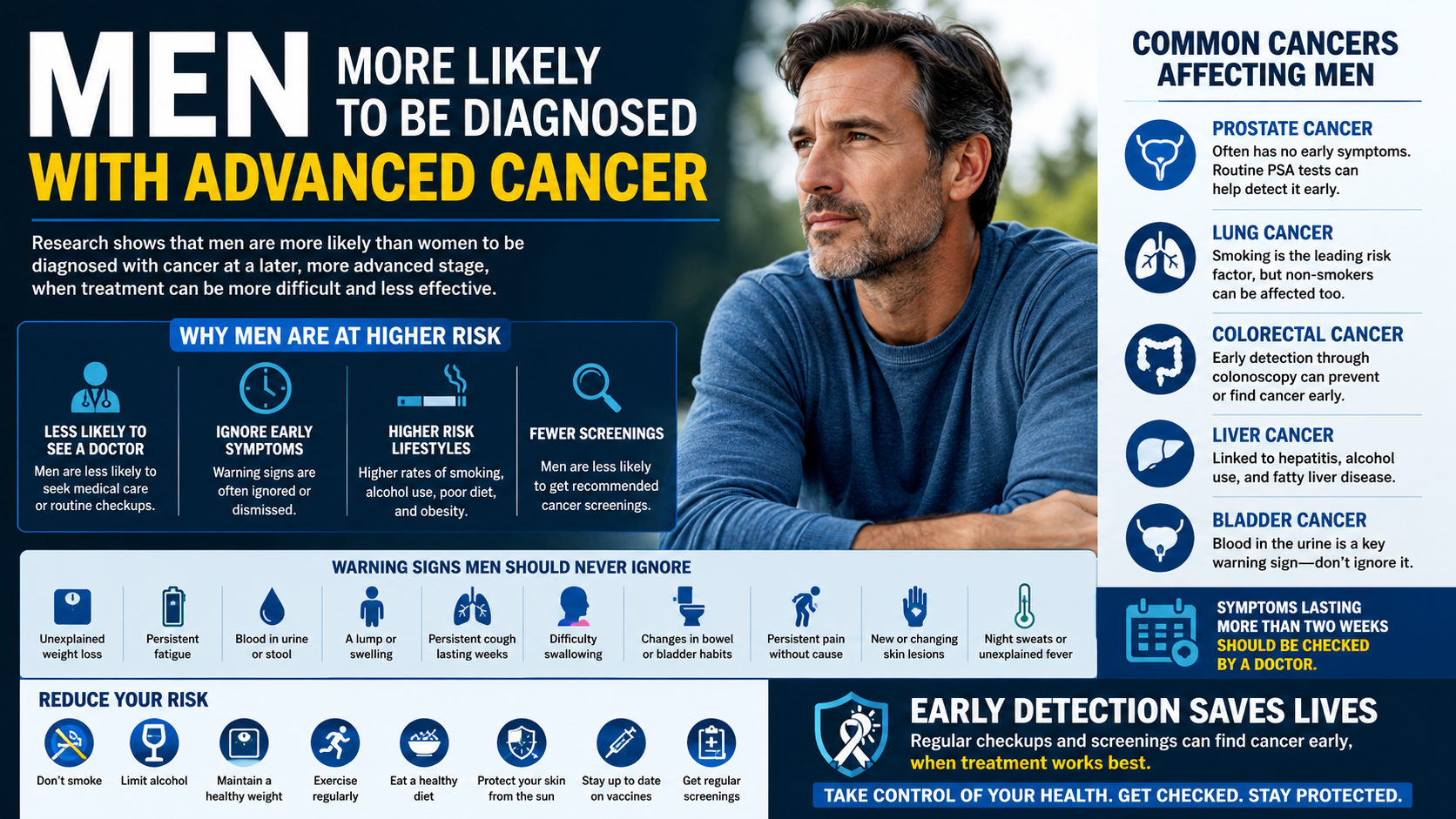
Several factors contribute to men receiving cancer diagnoses at more advanced stages. One of the primary reasons is that men are generally less likely to seek preventive healthcare or visit a doctor when symptoms first appear. Minor warning signs are often ignored or attributed to aging, stress, or temporary health issues, allowing cancer to progress unnoticed.
Additionally, some cancers common in men—such as prostate, colorectal, lung, and liver cancer—may not cause noticeable symptoms during their early stages. By the time symptoms become severe enough to prompt medical attention, the disease may have already spread to other parts of the body.
Lifestyle factors also play a significant role. Higher rates of tobacco use, alcohol consumption, obesity, poor dietary habits, and lower participation in routine health screenings increase the risk of developing aggressive cancers.
Common Cancers Affecting Men
Several cancers are frequently diagnosed at advanced stages in men, including:
- Prostate Cancer: Often develops slowly without early symptoms, making routine PSA testing and medical evaluations important for high-risk individuals.
- Lung Cancer: Smoking remains the leading risk factor, although non-smokers can also develop the disease.
- Colorectal Cancer: Early detection through colonoscopy or stool-based screening significantly improves survival.
- Liver Cancer: Chronic hepatitis infections, excessive alcohol use, and fatty liver disease increase risk.
- Bladder Cancer: Blood in the urine is often the earliest warning sign but is sometimes overlooked.
The Importance of Early Detection
Cancer detected in its earliest stages is generally easier to treat and is associated with significantly better survival rates. Regular health checkups and recommended screening tests help identify cancers before symptoms develop.
Men should discuss screening recommendations with their healthcare provider based on age, family history, genetics, and lifestyle risk factors. Individuals with a family history of cancer may require earlier or more frequent screenings
Warning Signs Men Should Never Ignore
Although symptoms vary depending on the type of cancer, common warning signs include:
- Unexplained weight loss
- Persistent fatigue
- Blood in urine or stool
- A lump or swelling
- Persistent cough lasting several weeks
- Difficulty swallowing
- Changes in bowel or bladder habits
- Persistent pain without a clear cause
- New or changing skin lesions
- Night sweats or unexplained fever
Any symptom lasting more than two weeks should be evaluated by a healthcare professional.
Reducing Cancer Risk
While not all cancers can be prevented, adopting healthy lifestyle habits can substantially reduce risk.
Helpful preventive measures include:
- Avoid smoking and tobacco products.
- Limit alcohol consumption.
- Maintain a healthy weight.
- Exercise regularly.
- Eat a diet rich in fruits, vegetables, whole grains, and lean protein.
- Protect your skin from excessive sun exposure.
- Stay up to date with recommended vaccinations, including hepatitis B and HPV when appropriate.
- Participate in routine cancer screening programs.
Conclusion
As researchers continue studying why men experience higher rates of advanced cancer diagnoses, one message remains clear: early detection saves lives. Greater awareness, healthier lifestyles, and routine medical evaluations can help reduce the number of late-stage diagnoses and improve treatment outcomes.
Taking action before symptoms become severe gives patients the best opportunity for successful treatment, improved quality of life, and longer survival.