Introduction
Stroke is one of the leading causes of disability and death worldwide. It occurs when the blood supply to a part of the brain is interrupted or reduced, depriving brain tissue of oxygen and nutrients. As a result, patients often experience neurological impairments such as weakness, paralysis, speech difficulties, cognitive dysfunction, and reduced mobility. While conventional rehabilitation therapies remain the cornerstone of stroke recovery, complementary treatments such as acupuncture have gained increasing attention for their potential to improve neurological outcomes. Research suggests that acupuncture may help alleviate neurological impairment after stroke by promoting recovery of brain function and enhancing rehabilitation efforts.
Understanding Stroke and Neurological Impairment
A stroke can be classified as either ischemic, caused by a blockage in a blood vessel, or hemorrhagic, caused by bleeding in the brain. Regardless of the type, brain cells can become damaged or die, leading to neurological deficits. Common post-stroke impairments include:
- Muscle weakness or paralysis
- Difficulty speaking or understanding language
- Problems with balance and coordination
- Memory and cognitive deficits
- Sensory disturbances
- Emotional and psychological challenges
The severity of these impairments varies depending on the location and extent of brain damage.
What Is Acupuncture?
Acupuncture is a traditional Chinese medicine practice that involves inserting thin needles into specific points on the body. It has been used for thousands of years to promote healing, restore balance, and relieve various health conditions. In modern healthcare, acupuncture is increasingly integrated into rehabilitation programs for conditions such as chronic pain, neurological disorders, and stroke recovery.
How Acupuncture May Help Stroke Patients
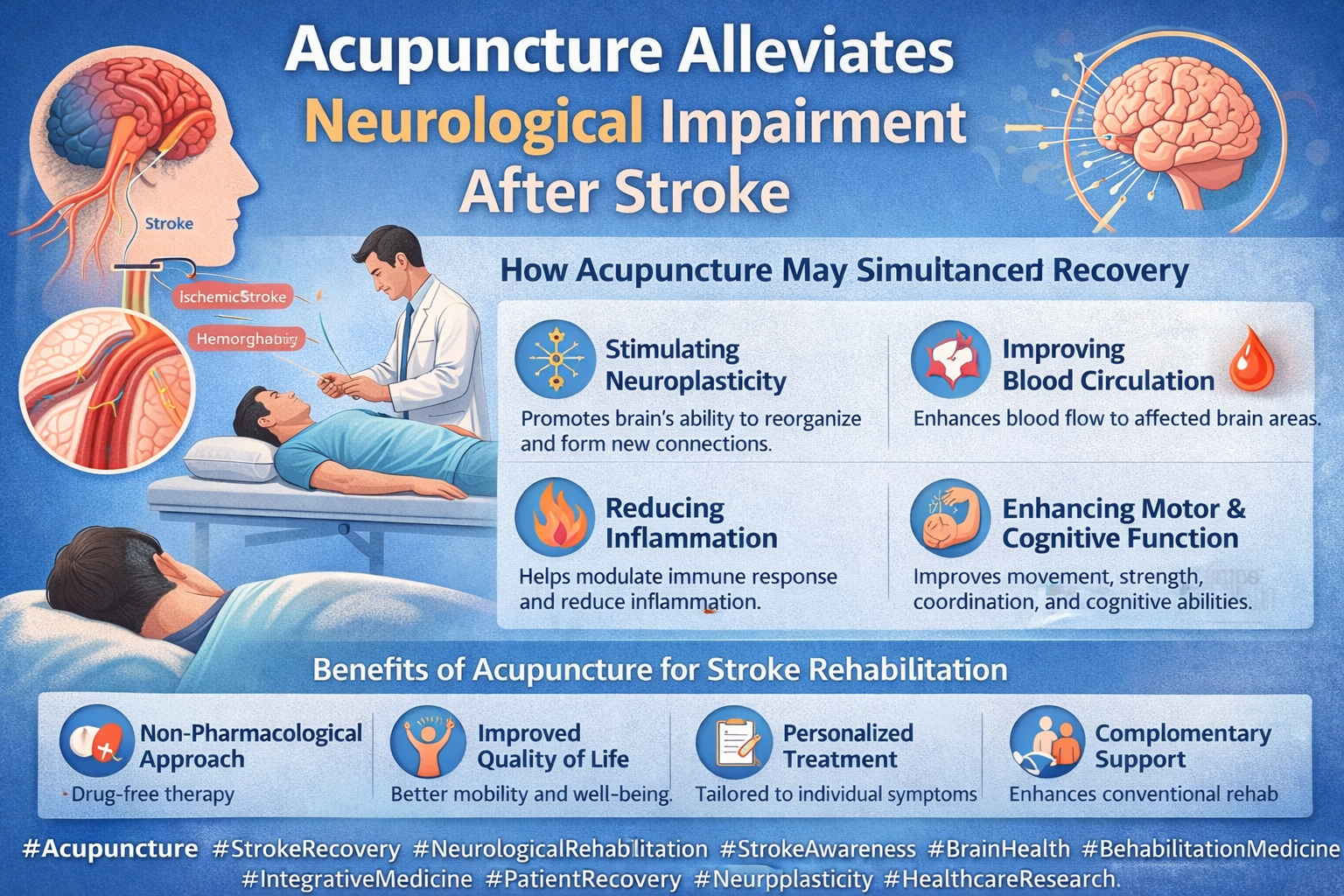
Stimulating Neuroplasticity
One of the key mechanisms behind stroke recovery is neuroplasticity, the brain’s ability to reorganize and form new neural connections. Acupuncture may stimulate neuroplasticity by activating specific regions of the brain, helping restore lost functions and improve communication between neurons.
Improving Blood Circulation
Acupuncture may enhance cerebral blood flow, delivering oxygen and nutrients to affected brain areas. Improved circulation can support tissue repair and recovery following stroke-related damage.
Reducing Inflammation
Inflammation contributes to secondary brain injury after a stroke. Studies suggest that acupuncture may help regulate inflammatory responses, potentially reducing further damage and supporting healing processes.
Enhancing Motor Function
Many stroke survivors struggle with movement and coordination. Acupuncture has been associated with improvements in muscle strength, limb mobility, and overall motor function when combined with conventional rehabilitation therapies.
Supporting Cognitive Recovery
Some research indicates that acupuncture may positively affect memory, attention, and cognitive performance in stroke patients. This can contribute to better independence and quality of life during recovery.
Clinical Evidence
Numerous clinical studies have investigated the effects of acupuncture on post-stroke rehabilitation. Findings suggest that patients receiving acupuncture in addition to standard care may experience greater improvements in neurological function compared to those receiving standard care alone. Benefits have been reported in areas such as motor recovery, speech function, activities of daily living, and overall neurological assessment scores.
However, experts emphasize that acupuncture should not replace evidence-based stroke treatments. Instead, it may serve as a complementary therapy that enhances rehabilitation outcomes when administered by trained professionals.
Benefits of Integrating Acupuncture into Rehabilitation
Non-Pharmacological Approach
Acupuncture offers a drug-free treatment option, reducing concerns about medication side effects and interactions.
Personalized Treatment
Therapy can be tailored to individual symptoms and rehabilitation goals.
Improved Quality of Life
Patients often report reduced discomfort, better mobility, and increased confidence during recovery.
Complementary Support
When combined with physical therapy, occupational therapy, and speech therapy, acupuncture may contribute to a more comprehensive rehabilitation plan.
Considerations and Safety
Although generally considered safe when performed by licensed practitioners, acupuncture should be administered using sterile techniques and appropriate clinical guidelines. Patients should consult healthcare providers before beginning acupuncture treatment, especially if they have bleeding disorders or other medical conditions.
Conclusion
Acupuncture has emerged as a promising complementary therapy for alleviating neurological impairment after stroke. Through mechanisms such as promoting neuroplasticity, improving blood circulation, reducing inflammation, and enhancing motor and cognitive recovery, acupuncture may support rehabilitation and improve patient outcomes. While more high-quality research is needed to fully understand its effectiveness, current evidence suggests that acupuncture can be a valuable addition to comprehensive stroke rehabilitation programs. By combining traditional and modern therapeutic approaches, healthcare providers may help stroke survivors achieve better recovery and an improved quality of life.