Introduction
Myopia, commonly known as nearsightedness, is becoming increasingly common among children worldwide. Children with myopia can see nearby objects clearly, but distant objects appear blurry. The condition often progresses during childhood and adolescence, increasing the risk of serious eye problems later in life, including retinal detachment, glaucoma, cataracts, and myopic macular degeneration. Recent research has shown that atropine eye drops can effectively slow the progression of myopia in children, offering a promising solution for managing this growing public health concern.
What Is Atropine?
Atropine is a medication that has been used in ophthalmology for many years. Traditionally, it has been used to dilate the pupils and relax the eye’s focusing muscles during eye examinations and certain treatments. In recent years, low-dose atropine eye drops have gained attention for their ability to slow the progression of myopia in children without causing significant side effects.
Understanding Myopia Progression
Myopia occurs when the eyeball grows too long from front to back or when the cornea is too curved. As a result, light entering the eye focuses in front of the retina instead of directly on it. During childhood, the eye continues to grow, and myopia can worsen rapidly. Environmental factors such as increased screen time, reduced outdoor activity, and prolonged near work are believed to contribute to the rising prevalence of myopia.
Slowing myopia progression is important because higher levels of myopia are associated with greater risks of vision-threatening complications in adulthood.
How Atropine Eye Drops Work
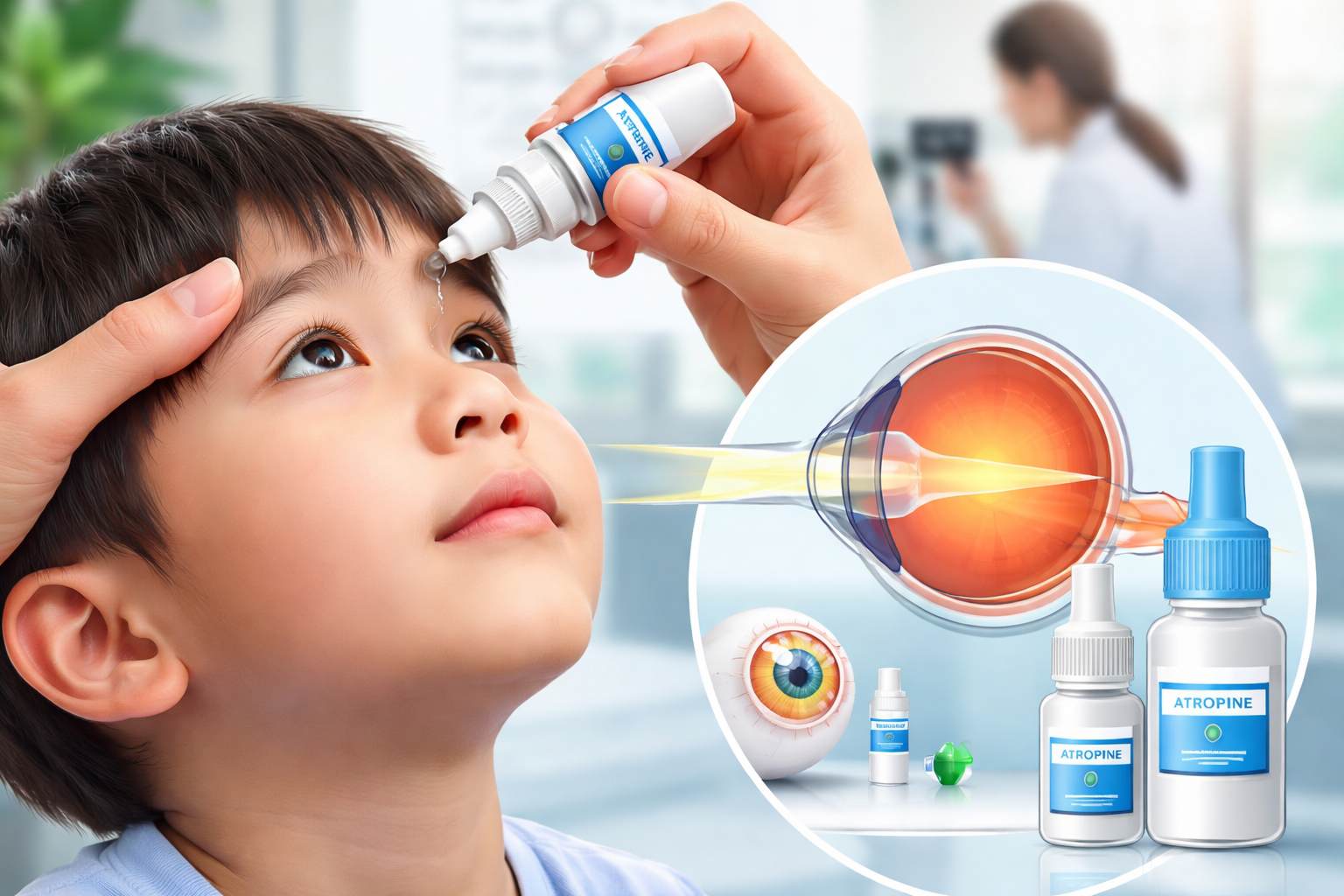
Although the exact mechanism is not fully understood, researchers believe atropine influences the biochemical pathways that regulate eye growth. By slowing excessive elongation of the eyeball, atropine helps reduce the rate at which myopia progresses.
Low-dose atropine formulations, typically ranging from 0.01% to 0.05%, are most commonly prescribed. These lower concentrations provide effective myopia control while minimizing side effects such as light sensitivity and blurred near vision.
Evidence Supporting Atropine Use
Numerous clinical studies have demonstrated the effectiveness of atropine eye drops in reducing myopia progression. Research conducted in several countries, particularly in Asia where myopia rates are especially high, has shown that children receiving low-dose atropine experience significantly slower increases in nearsightedness compared with those receiving placebo treatments.
Studies have found that atropine can reduce myopia progression by approximately 30% to 70%, depending on the concentration used and individual patient characteristics. Higher concentrations may provide stronger effects but are also associated with a greater likelihood of side effects.
Possible Side Effects
While low-dose atropine is considered safe, some children may experience mild side effects, including:
- Slight pupil dilation
- Increased sensitivity to bright light
- Mild difficulty focusing on close objects
- Temporary eye irritation
These effects are usually mild and manageable, especially with lower concentrations of the medication.
Conclusion
Atropine eye drops have emerged as an effective and safe option for slowing myopia progression in children. By reducing excessive eye growth and limiting worsening vision, atropine can help protect long-term eye health and lower the risk of future complications. As myopia rates continue to rise globally, early intervention with evidence-based treatments such as low-dose atropine offers an important opportunity to preserve vision and improve quality of life for affected children. Parents concerned about their child’s worsening eyesight should consult an eye care professional to determine whether atropine therapy may be an appropriate treatment option.
Our Products
-
Gabapentin 400mg
$1.00 / Per Pill
-
Gabapentin 300mg
$1.00 / Per Pill
-
Fenbendazole 500mg
$3.00 / Per Pill