
Introduction
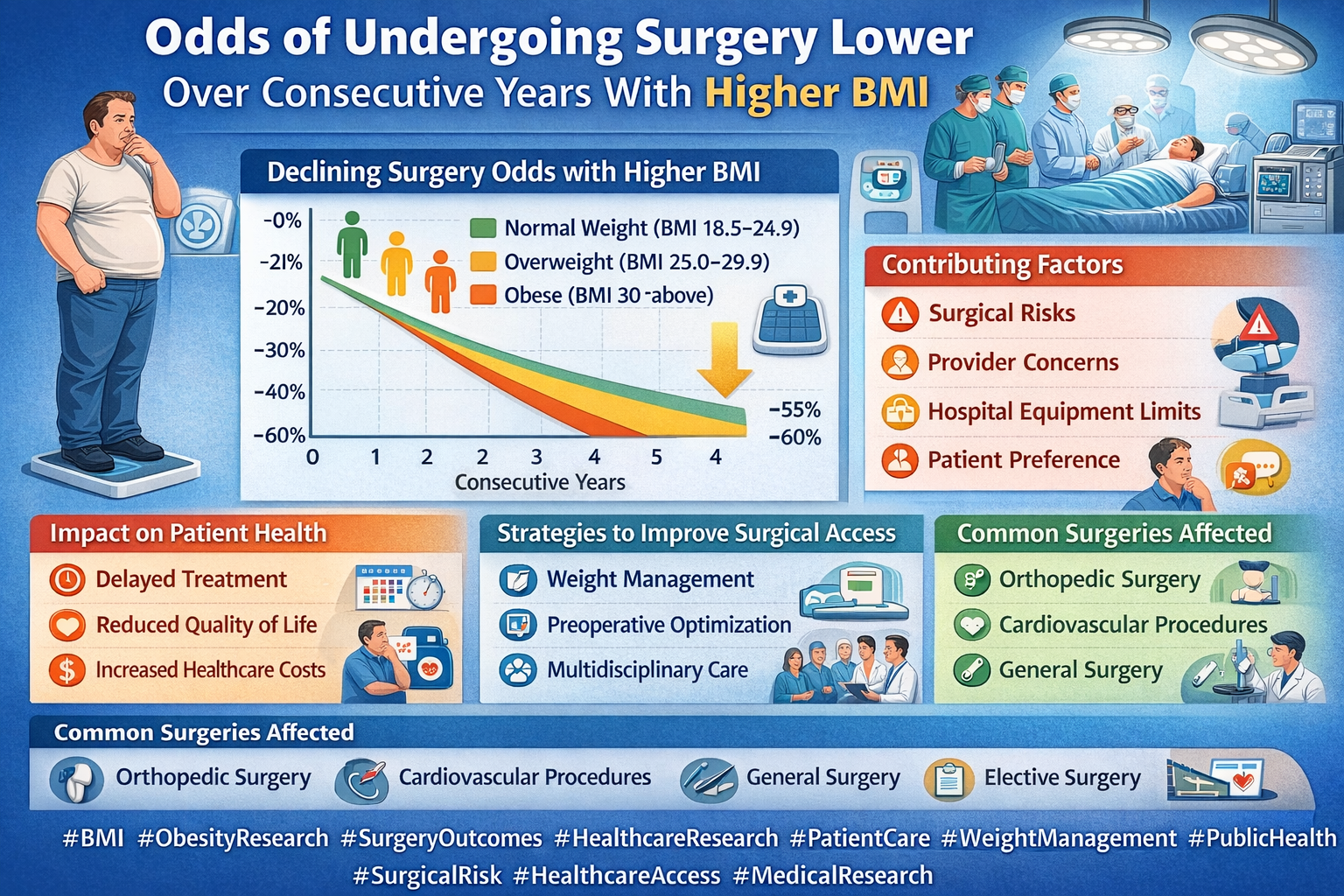
Body Mass Index (BMI) is a widely used measure to classify individuals based on body weight relative to height. Research has shown that individuals with higher BMI often experience different healthcare outcomes compared to those with normal BMI. One notable trend is that the odds of undergoing surgery tend to decrease over consecutive years as BMI increases. This pattern has important implications for healthcare access, surgical decision-making, and patient outcomes.
Understanding BMI
What is BMI?
BMI is calculated by dividing a person’s weight in kilograms by the square of their height in meters. It is commonly categorized as:
- Underweight: BMI below 18.5
- Normal Weight: BMI 18.5–24.9
- Overweight: BMI 25–29.9
- Obesity Class I: BMI 30–34.9
- Obesity Class II: BMI 35–39.9
- Obesity Class III: BMI 40 and above
Importance of BMI in Healthcare
BMI is often used as a screening tool to assess health risks associated with excess body weight, including diabetes, cardiovascular disease, and certain cancers.
Relationship Between BMI and Surgery
Declining Surgery Rates with Higher BMI
Studies suggest that as BMI increases, patients are less likely to undergo surgical procedures over time. This trend may be observed across various types of surgeries, including orthopedic, cardiovascular, and elective procedures.
Consecutive-Year Trend
The reduction in surgical odds is often seen over multiple years, indicating a persistent pattern rather than a temporary effect. Higher BMI patients may experience delays, cancellations, or avoidance of surgery due to increased risk factors.
Factors Contributing to Lower Surgical Odds
Increased Surgical Risk
Patients with obesity are at greater risk for complications such as:
- Surgical site infections
- Blood clots
- Respiratory complications
- Longer recovery times
- Anesthesia-related risks
Healthcare Provider Concerns
Surgeons may recommend alternative treatments before surgery due to concerns about operative risks and postoperative complications.
Hospital Resource Limitations
Some healthcare facilities may have equipment or infrastructure limitations when caring for patients with severe obesity.
Patient Preference
Individuals with higher BMI may choose to postpone or avoid surgery because of concerns about risks, recovery, or previous negative healthcare experiences.
Impact on Patient Health
Delayed Treatment
Postponing surgery can lead to worsening symptoms and disease progression.
Reduced Quality of Life
Conditions requiring surgical intervention may continue to affect mobility, comfort, and daily functioning.
Increased Healthcare Costs
Delays in treatment can result in additional medical visits, medications, and emergency care.
Common Surgical Areas Affected
Orthopedic Surgery
Joint replacement procedures often show lower utilization rates among patients with higher BMI despite increased need.
Cardiovascular Procedures
Obesity-related risks may influence decisions regarding heart and vascular surgeries.
General Surgery
Procedures such as hernia repair or gallbladder surgery may be delayed due to obesity-related concerns.
Elective Surgery
Non-urgent surgeries are more likely to be postponed or denied when BMI exceeds certain thresholds.
Strategies to Improve Surgical Access
Weight Management Programs
Structured nutrition and exercise programs can help reduce surgical risk and improve eligibility.
Preoperative Optimization
Healthcare teams can address medical conditions such as diabetes, hypertension, and sleep apnea before surgery.
Multidisciplinary Care
Collaboration between surgeons, primary care physicians, dietitians, and specialists can improve outcomes.
Patient Education
Providing clear information about risks and benefits helps patients make informed decisions regarding surgical treatment.
Importance for Healthcare Systems
Understanding the relationship between BMI and surgical access can help healthcare organizations develop policies that reduce disparities while maintaining patient safety. Efforts should focus on balancing risk management with equitable access to necessary surgical care.
Conclusion
Evidence suggests that the odds of undergoing surgery decrease over consecutive years as BMI increases. Factors such as elevated surgical risk, provider concerns, healthcare system limitations, and patient preferences contribute to this trend. Addressing these challenges through weight management, preoperative optimization, and patient-centered care can improve access to surgery and enhance long-term health outcomes.
Our Products
-
Gabapentin 400mg
$1.00 / Per Pill

-
Gabapentin 300mg
$1.00 / Per Pill

-
Fenbendazole 500mg
$3.00 / Per Pill